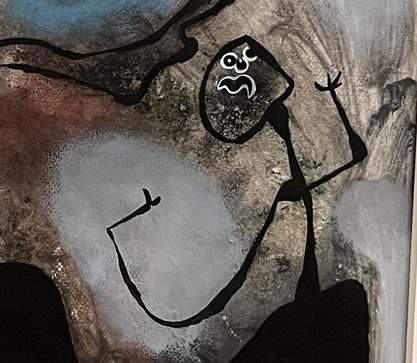
I loved this depiction of a person who just looks absolutely flustered and bewildered at the same time. Somewhat silly and whimsical, but it resonates nonetheless.
Approx. 8 min read
Lately, I’ve been feeling bewildered with what’s going on in America, like the stick caricature in the Joan Miro painting. Up seems down, and wrong seems right. Ethics seem to be thrown out the window – or maybe that’s how it always was… Prices are going up, and people are frustrated. The cities are bewildered, the states are bewildered, the nation is bewildered. On both sides of the political aisle – I think Republicans and Democrats alike are more or less bewildered by the current administration’s policies.
Do we really want to annex Canada? Did we need to start a trade war with Europe and our closest allies? What’s with all these executive orders? Offering a $5 million dollar pathway to citizenship via the “gold card?” Since when did we, the great country of the United States of America known for championing freedom of speech, freedom of religion, freedom of lots of things – since when do we vote with North Korea and Russia when it comes to UN resolutions?
Something seems off at the top, and like I said, maybe, maybe it was always that way and the current administration just doesn’t particularly care to hide it. Fine, I suppose, but that doesn’t remove the feeling I am having, and which I suspect many of my readers are having – bewilderment. Hold on to that word, we’ll come back to it.
In a completely random turn of thought (which you might come to see is not so random) – this past weekend was the Jewish holiday of Purim! Jews around the world gathered to celebrate what they call the Megillah, or what most Christians would understand as the book of Esther. Part of the celebration of Purim involves dressing up, much like Halloween. There’s the bad guy Haman, and the King Ahasu-erus (Xerxes) and of course, the leading lady, Esther! Everybody dresses up and has a good time, because the story of Purim is about how the Jews overcame a plot of murder through the courageous actions of Esther and also Mordecai, a plot which was planned by Haman and allowed by the king against the entire Jewish population in Persia.
Now, why do I come out swinging with political statements, and then follow it up with a fun aside about a Jewish holiday? Well, I love the story of Esther, and I didn’t know how much I needed to really understand it until the beginning of this year when I felt, well, bewildered by the current events. See, in the book of Esther, the drama unfolds really quite nicely. The story almost seems to have a theatrical quality to it with separate acts, rising and falling tension, etc. (Also, if you haven’t read the book of Esther in a while, you should go do it! It will only take like 15 min of your time!) As a thought experiment, if I were to separate the book into three acts, I would place the ending of Act I right at Esther 3:15, which says this: “The couriers went out, spurred on by the king’s command, and the edict was issued in the citadel of Susa. The king and Haman sat down to drink, but the city of Susa was bewildered.”
See, there’s that word!
Bewildered!
Basically, the king and Haman (mostly Haman) worked out this edict where on a random day which was decided by casting lots, the nation of Persia would legally allow anyone to attack the Jews (think like the Purge), killing them, taking their stuff, pillaging etc. for no reason other than Haman’s personal grudge against Mordecai. The couriers have just begun carrying this news to the far corners of the Persian kingdom, and guess what, the people of Susa are friggin’ confused! And while they’re doing this, the king and his top advisor are sitting down to play golf, erm, I mean drink wine, seemingly unaware or simply without a care about the confusion they’re causing for the population they are responsible for overseeing.
I was discussing all these current events not too long ago with my partner, and somehow I connected that verse (Esther 3:15) to what I was currently feeling, specifically through the word “bewildered.” For the story of Esther, it’s the dramatic low point that starts the upward action. The bewilderment indicates to the reader (and listener) that something is really not right, and everyone kinda knows it. Laws are being made that are disrupting society and allowing powerful people with their own agendas to take advantage of those who can’t defend themselves, and the people of Susa have to make sense of this? Enter confusion. I can imagine the Susaites(?) gathering at their local eateries, discussing the current events…
“Did you hear about the king’s edict?”
“But wait, who are the Jews again, and what exactly did they do? The edict doesn’t say…”
“What’s to keep the king from doing something similar to our people?”
There’s many more interesting comparisons to today’s politics, but I don’t want to get into them too much. Ok maybe a few:
- There was that one time the White House posted Long Live The King, in reference to Trump. Not a very presidential thing to post, one might say. Since when have we wanted kings? I know we had them in Biblical times, but that never turned out well… See Esther and other stories, for example.
- Haman manages to bend the king’s ear and persuades him to issue his (Haman’s) edict through a few logical reasons, but also, money. The text says Haman would contribute 10,000 talents of silver to the King’s personal treasury. That amount today using internet math is $351,221,186. Elon Musk spent, according to some sources, $200,000,000 via a PAC to land a spot next to Donald Trump’s ear. This comparison is probably nothing really noteworthy, as I feel most politics have these sorts of money exchange involved, but still, fun to point out nonetheless.
- Haman creates his edict because Mordecai wouldn’t bow down to him. In true egotistical fashion, this goes straight to Haman’s head and he immediately wants to take down all the Jews in order to get his vengeance on his perceived injustice. An advisor/leader with a very fragile ego who tries to make laws whenever that ego gets hurt…. hmmm.
Ok. I think that’s quite enough of a political blog. The real point of Pt. 1 is simply that in the book of Esther, it’s not just the Jews who are bewildered at the end of chapter 3. It’s the whole dang city. Of course the Jews should be bewildered and terrified, but apparently everyone else is bewildered as well, and the laws don’t even really affect them! Put a different way, when laws are issued targeting individual powerless groups in order to satisfy personal agendas or enrich the already powerful, the entire community begins to suffer.
Dramatically, this is the low point from which all the action arises – bewilderment. After this, Esther is approached by Mordecai and asked to save the Jews by appearing before the king (another highly tense scene). This goes well, the bad guy Haman gets got, and the story ends right? Wrong. I would call this the ending of Act II. Act III ends, well, when Esther is over, but it ends strangely enough with Mordecai’s polling numbers in chapter 10, verse 3: “For Mordecai the Jew was next in rank to King Ahasu-erus, and he was great among the Jews and popular with the multitude of his brethren, for he sought the welfare of his people and spoke peace to all his people.” Isn’t the book about Esther? Why are we ending with Mordecai? More of this in Pt 2, which will probably be a little less political for those who are wondering.
I’d like to end Pt.1 with this non-partisan message: It’s never a good feeling to be bewildered and/or confused. No matter where one falls on the political spectrum, it’s always worth reaching out and checking on friends and family, making sure they’re doing alright during this time of great uncertainty. Republicans and Democrats, no, Americans everywhere still have to buy groceries and go to work (or try to find work), pay bills, and figure out how to respond to the new direction this country is being taken. It is no easy task, but I would hope reaching out and checking on those close to you is a great start. Ask questions, be open-minded. You don’t have to sit down and eat dinner with Donald Trump every holiday, but you might have to do that with your family so be kind, listen gracefully, and take care of each other.
As I’ve hinted for Pt. 2, I’m going to get real biblical with the book of Esther, with the help of another book I read not too long ago called The Queen You Thought You Knew by Rabbi David Fohrman.
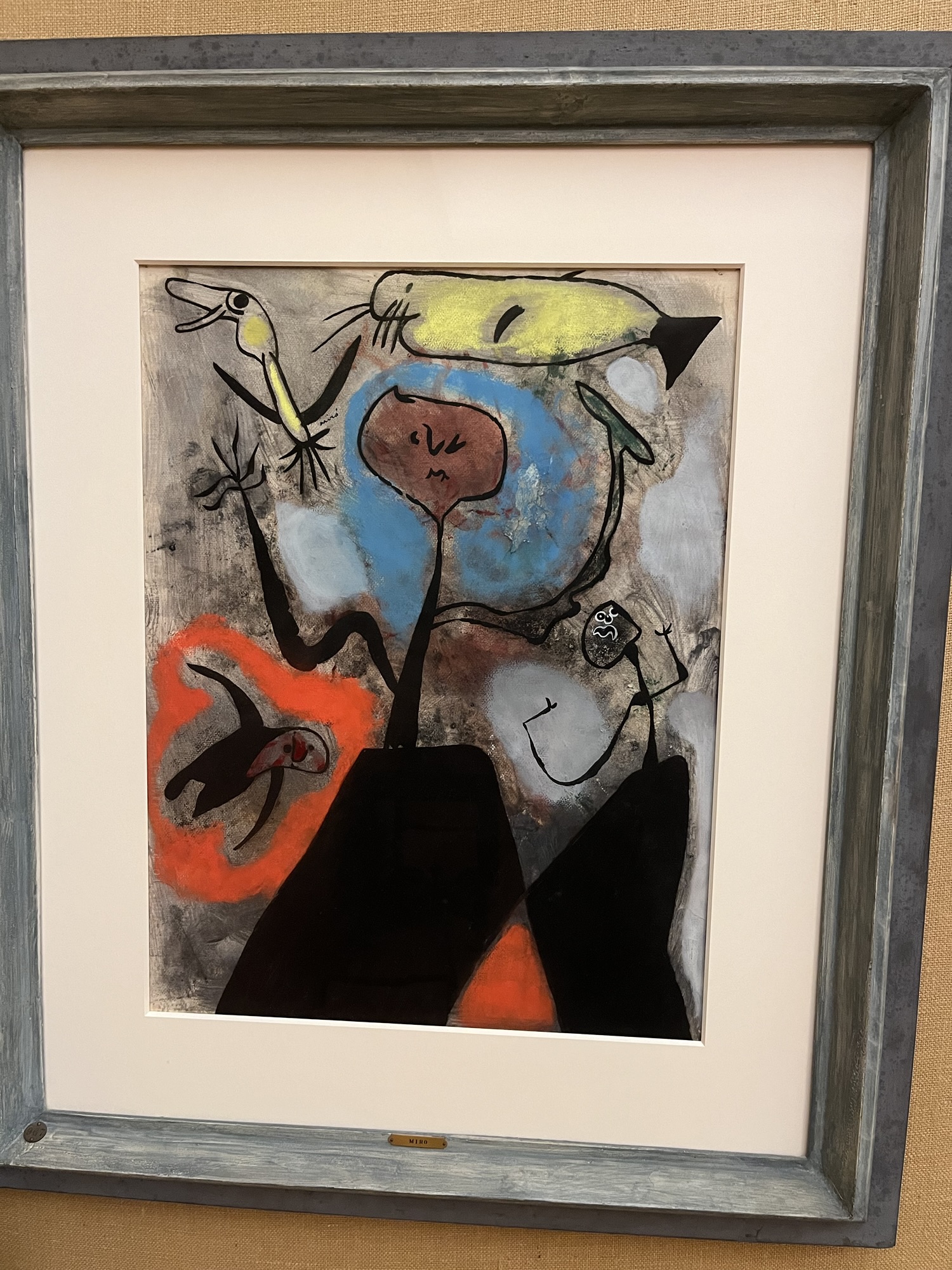
Two Women Surrounded by Birds

 The Lark Ascends
You are not the only one with Esther on the brain! This is on until August. Let’s get the Ritter Family together and go! https://thejewishmuseum.org/exhibitions/book-of-esther-in-the-age-of-rembrandt
LikeLike